
He was perfect on paper—but terrible for me Emotional Logic Behind Staying in Toxic Love
I used to brag about him. He had a good job, a charming smile, and a way of making everyone in the room laugh. My friends said I’d finally found “the one.” On paper, he looked like the dream I’d been waiting for.
But behind closed doors, he made me question my worth. The compliments came with conditions. The affection had rules. He told me I was “too emotional,” that I “overreacted.” So I started shrinking myself just to keep the peace.
I ignored the red flags because I didn’t want to believe I’d chosen wrong. I thought love meant fixing things, proving I could stay no matter what. I didn’t see that I was clinging to an idea of love—not love itself.
What I didn’t realize then was that what kept me there wasn’t weakness. It was the quiet, confusing Emotional Logic Behind Staying in Toxic Love—the twisted belief that if I just held on tighter, I could make broken things beautiful again.
Hope as a trap:
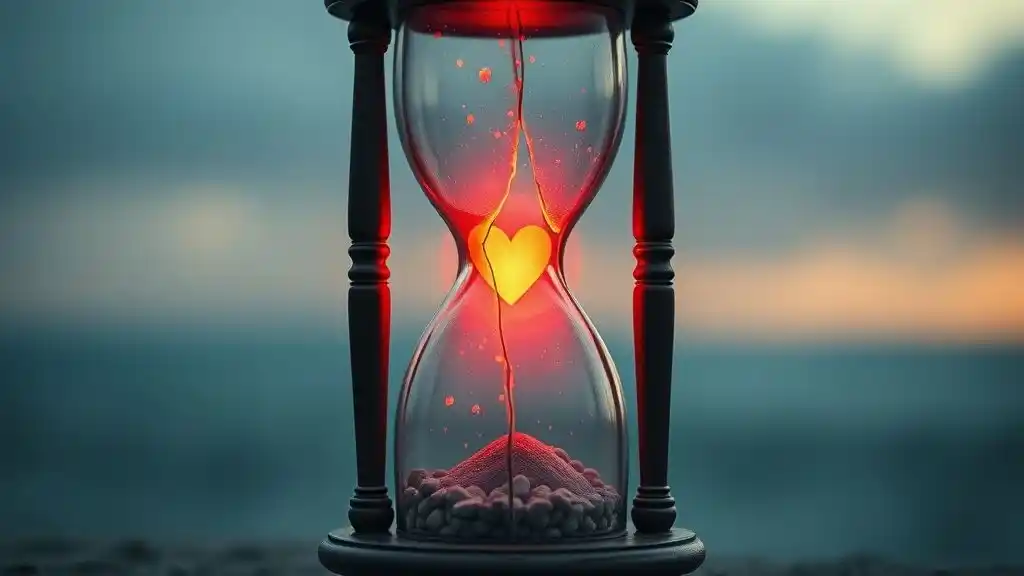
“this time will be different”
He’d hurt me, promise to change, and for a while, he did. Then the cycle started again—apology, comfort, disappointment. Each time, I told myself this time will be different.
Hope became my drug. It gave me a reason to stay when logic told me to go. I wasn’t addicted to him; I was addicted to the idea of him finally loving me right.
That’s how toxic love works—it feeds you just enough kindness to keep you alive while starving your self-worth. You start chasing moments instead of peace, trying to fix what keeps breaking you.
I thought my love could save him. But love isn’t medicine for someone who doesn’t want to heal. The hardest part of toxic relationship recovery is realizing that healing means letting go, not holding on.
Trauma bonds: when pain feels like intimacy

I used to think our fights meant we were passionate. The yelling, the tears, the intense makeups—it all felt like proof of how deeply we cared. But really, it was a trauma bond.
Pain had become our language. Every argument was followed by affection, every wound by apology. It created a false sense of closeness—a dangerous emotional loop that felt like love but wasn’t.
When you grow up around unpredictable love, chaos feels familiar. My nervous system mistook anxiety for connection. The highs were euphoric, the lows unbearable, and I thought surviving that cycle meant we were strong.
But real love isn’t supposed to feel like walking on glass. It’s calm. Safe. Soft.
Breaking a trauma bond breakup feels like losing a part of yourself—but it’s really just reclaiming what was always yours.
Fear of being alone: why staying seems safer than walking out

There were nights I sat on the bathroom floor, phone in hand, ready to leave—and didn’t. The silence scared me. The idea of waking up without him felt worse than another day of walking on eggshells.
I told myself staying was safer. That being half-loved was better than being alone. Society teaches women to endure, to fix, to stay quiet. “Be patient,” they say. “Love is hard.”
But love isn’t supposed to erase you. It’s supposed to help you grow. I didn’t realize that my fear of loneliness was louder than my desire for peace. I wasn’t scared of losing him—I was scared of losing my sense of belonging.
Sometimes, comfort is the most dangerous trap. And the first step toward emotional healing is choosing discomfort over destruction.
I lost myself, but still saw promise in him
I changed everything to fit his world. My clothes, my laugh, my friends, even my dreams. But somehow, I still believed in his potential.
That’s the cruel part of love—you start loving the idea of who someone could become instead of seeing who they are. You trade your self-worth for hope, thinking if you love harder, they’ll love you better.
That’s the quiet Emotional Logic Behind Staying in Toxic Love—the belief that love can transform pain if you just endure long enough. But that logic is a lie. Love can’t grow in the soil of self-sacrifice.
When you start losing yourself to keep someone else, that’s not love anymore—it’s survival. True self-worth rebuilding begins when you stop waiting for their potential and start honoring your own.
The social mask: smiling through heartbreak
I posted happy photos. I said, “We’re fine.” I told everyone we were just “working through things.” But behind the smile was exhaustion.
I became an actress in my own life—pretending to be happy so people wouldn’t see the cracks. The worst part? No one suspected. Because when you’re good at hiding pain, people stop looking closely.
Women are taught to carry heartbreak gracefully, to smile through the ache, to protect their partner’s image even when they’re falling apart. But pretending made me feel invisible.
Every fake smile was another betrayal of myself. I wasn’t protecting him—I was protecting my illusion of love.
Healing began when I stopped performing and started telling the truth. It wasn’t weakness—it was liberation.
When friends and family stay silent—why isolation matters

At first, my mom and best friend tried to talk to me. “You don’t seem happy,” they’d say. I brushed it off. Then he started saying they didn’t like him, that they were “bad influences.”
Slowly, I pulled away. I stopped calling. I stopped visiting. My world shrank until it was just him.
That’s how isolation happens in toxic love—not overnight, but inch by inch. You start believing only they understand you. When friends stop asking and family stops pushing, you feel even more alone.
Without a support system, leaving feels impossible. You start thinking maybe it’s your fault. That’s how control hides—in silence, in distance, in shame.
The truth? You need people. You need community. You need reminders that love doesn’t have to hurt to be real.
Financial/emotional investments—why it’s hard to leave
I remember counting how much I’d given him—money, time, energy, love—and thinking, I can’t walk away now. I was too invested.
That’s the sunk-cost fallacy in love: believing you can’t quit because you’ve already given too much. You stay, hoping to recover what’s been lost, but the longer you stay, the more you lose.
You keep telling yourself you’ll leave when things get worse—but things already are. You just stop noticing because surviving becomes normal.
That’s the painful Emotional Logic Behind Staying in Toxic Love—the thought that leaving means wasting everything you’ve poured in, when in reality, staying means losing yourself a little more each day.
Letting go is hard, but toxic relationship recovery begins when you realize that peace is worth more than any investment.
My turning point: the day I whispered “I choose me”
The morning I left, it wasn’t dramatic. No screaming, no begging. Just silence and shaking hands. I looked at him sleeping and felt an emptiness that finally outweighed the fear.
I packed my bag. My heart broke quietly. But for the first time, I wasn’t leaving because of him—I was leaving for me.
Healing didn’t come overnight. I cried for weeks. I questioned my choice. But slowly, the quiet that once scared me became peace.
I realized choosing myself wasn’t selfish. It was sacred. I stopped waiting for someone to save me and learned to be my own safe place.
That whisper—I choose me—was the loudest truth I’d ever spoken. That was the start of self-worth rebuilding and the slow miracle of emotional healing.
Conclusion: Rewriting my idea of love
Looking back, I don’t hate him. I don’t even hate the girl who stayed. She believed in love, in hope, in potential.
But love shouldn’t demand your silence or your pain. Real love doesn’t shrink you—it lets you breathe.
The Emotional Logic Behind Staying in Toxic Love isn’t foolishness. It’s the heartbreaking mix of fear, hope, and longing that keeps us holding on when we should let go. But once you understand it, you can finally break free from it.
Because love that costs your peace will never be worth the price—and healing that begins with truth will set you free.
Disclaimer: This post is for informational and emotional support purposes only. Every relationship is unique, and this is not professional legal, medical, or mental health advice. Read our full disclaimer.
Affiliate Disclosure: Some links in this post may be affiliate links. If you make a purchase through them, I may earn a small commission at no extra cost to you. Learn more here.