Your boyfriend sends you a meme at 2 a.m.
Your girlfriend triple-texts when you don’t reply fast enough.
Your partner leaves you on read for six hours but posts a story on Instagram.
And somewhere between the confusion and the chaos, you wonder: Is this what love looks like now?
The answer is both yes and no.
Because while Gary Chapman’s five love languages still matter, they’ve been hijacked by WiFi signals, typing dots, and the cruel suspense of “seen 2:17 p.m.” Traditional ways of showing affection—like handwritten letters or long walks—still exist, but in the digital age, they’ve morphed into emojis, memes, and late-night text replies.
Here’s the truth nobody’s saying out loud: digital love languages aren’t just modern translations of old-school love. They’re entirely new emotional dialects—spoken through screens, notifications, and silence.
This isn’t another “five love languages but make it digital” post. This is a real, unfiltered decode of what your texting habits, emoji choices, and online silences reveal about how you love—and how you need to be loved.
By the end, you’ll recognize your digital love language, understand your partner’s, and stop misreading silence as disinterest or triple-texts as desperation.
Why the Original 5 Love Languages Don’t Fully Translate Online
Let’s be honest—love languages texting doesn’t work the same way it did in real life.
Physical touch? You can’t send that through a screen (yet).
Acts of service? Ordering someone UberEats doesn’t hit the same as cooking dinner.
Quality time? FaceTiming while scrolling TikTok doesn’t count.
Gifts? An Amazon wishlist feels transactional, not tender.
Words of affirmation? Half of them get ruined by “k” or “lol.”
We’re trying to use digital tools to express analog emotions—and it’s creating static between intention and interpretation.
Research backs this up. Studies show that texting patterns often mirror attachment styles.
People with anxious attachment tend to text often, seek reassurance, and panic at delays.
Avoidant types delay responses, keep messages short, and protect their independence.
So your digital affection signs—when you text, how fast you reply, how often you send emojis—aren’t random. They’re emotional fingerprints.
We’ve entered a world where love is both constant and disconnected, visible and invisible. Screens bring us closer yet somehow make us lonelier.
So, what are the real digital love languages?
Let’s decode them—the raw, messy, very human ways we express love through pixels and pings.
The 6 Real Digital Love Languages (And What They Actually Mean)
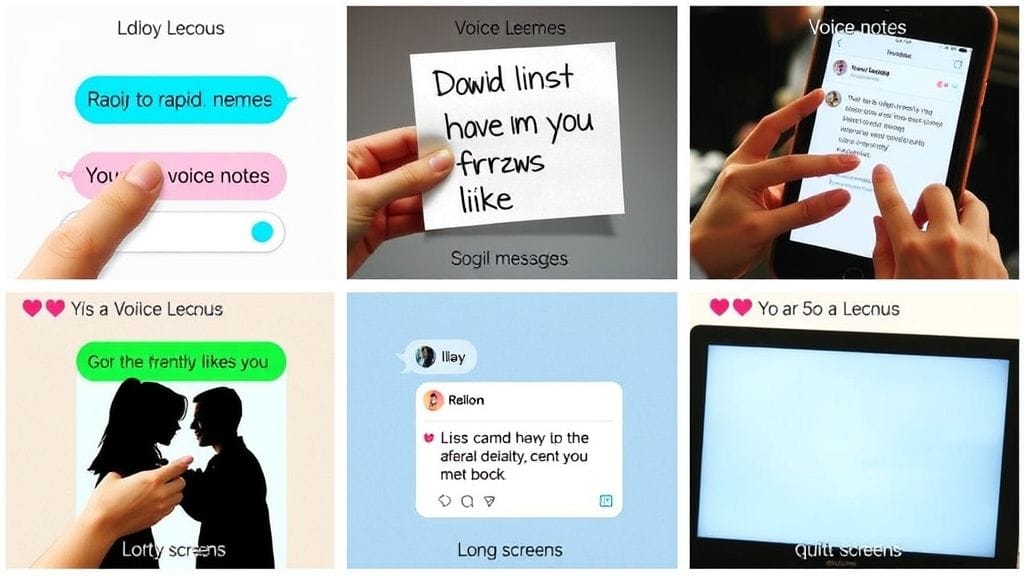
Love isn’t linear, so these aren’t ranked. Each one is its own dialect—unique, equal, and often misunderstood.
The Rapid Responder — “I Drop Everything to Text You Back”
You know this person. Their reply arrives before you even lock your phone. They see your message, respond instantly, and never leave you wondering.
For them, texting habits in relationships are sacred. Responsiveness equals presence. They’re saying: “You matter more than my to-do list.”
The dark side: Their speed can feel suffocating to slower texters. Silence triggers anxiety. Delayed responses feel like rejection.
If this is your partner, don’t mistake their fast replies for clinginess—it’s devotion.
Mirror their pace when you can, but set gentle boundaries:
“I love hearing from you, but I might be slower when I’m working.”
If this is you, silence feels like distance. You crave reassurance that you’re still in their mind. Try breathing through the waiting. Love isn’t measured in minutes.
Real story: “My girlfriend replies faster than I can finish typing. I used to find it intense, but now I see it’s her way of saying, I’m here, always. Once I understood that, it stopped feeling like pressure—and started feeling like love.”
The Meme Sender — “I Think of You Every Time I Laugh”
They send you memes, reels, TikToks, and tweets all day long. It’s not random—it’s love coded in humor.
“This reminded me of you” is their version of “I love you.” Every meme is a breadcrumb of affection. Relationship trends even call it “meme-ingful connection.”
The dark side: If you crave deeper conversations, it can feel surface-level. You want vulnerability—they send cat videos.
How to receive it: Don’t dismiss it. Those funny clips are emotional deposits.
Try replying with a question: “Why did this make you think of me?”
If this is you, you connect through joy. But balance humor with honesty.
Send the meme, then follow up with: “Also, I miss you.”
Red flag version: They send memes to avoid real talk. Humor becomes armor. Real love includes laughter—but also truth.
The Voice Note Marathoner — “I Need to Hear Your Actual Voice”
They live for voice notes.
They’ll send five-minute audio messages or call just to hear your tone. To them, love isn’t complete without sound.
This is the digital words of affirmation style—the warmth of voice replaces text.
Research shows that in long-distance relationships, frequent texting keeps connection alive. But in close relationships, hearing each other’s voice deepens satisfaction. The medium matters.
The dark side: Voice notes can feel exhausting to low-energy texters. Some feel pressured by constant FaceTime requests.
If this is your partner, know this: their voice messages aren’t inconvenient—they’re intimacy in motion. Listen fully, even if you reply with text.
If this is you, you crave tone and texture, not just text. But not everyone can match your energy—schedule voice dates instead.
Love isn’t just said—it’s heard.
The Strategic Liker — “I Support You Publicly”
They’re always the first to like your story, drop a heart on your selfie, or comment “🔥” under your new post. Their digital affection signs are public, not private.
To them, love means visibility: “I’m proud to be with you.”
The dark side: It can feel performative. You wonder if they’re showing off or showing up.
And when they stop liking your posts, your brain spirals: What changed?
How to receive it: Appreciate their effort, but seek a private connection too.
Say: “I love how you show me off, but I also need your quiet moments.”
If this is you, you express pride through public support. But check your motives:
Are you posting for them or for validation from others?
Red flag: They post you online but never text you privately. That’s performance, not partnership.
The Paragraph Poet — “I Write You Essays at Midnight”
You know this one—they write long texts filled with emotion and detail. Every word feels like it came straight from their heart.
This is pure texting communication in relationships, the written version of soul-baring.
For them, love equals articulation. They need words like oxygen.
The dark side: Not everyone can reciprocate with paragraphs. When your “I feel so deeply connected to you” gets a “cool,” it stings.
How to receive it: Read every word. Don’t skim. A short but sincere reply like,
“I don’t have words right now, but I felt everything you said,”
can mean the world.
If this is you, remember—brevity doesn’t mean coldness.
Some people love silently. You write essays; they show up. Both are valid.
The truth: typing your heart out takes time. In the digital world, time is love.
The Silence Holder — “I Love You Enough to Not Need Constant Contact”
They disappear online but never disappear emotionally. They don’t text much, don’t over-communicate, and they’re perfectly comfortable in the quiet.
Their relationship texting pattern is peaceful distance.
They believe a real connection doesn’t need constant proof.
The dark side: To anxious partners, their calm feels like neglect.
You start to think: “Do they even care?”
But this silence isn’t indifference—it’s security. They don’t need validation to feel bonded.
If this is your partner, don’t interpret their quiet as rejection. Ask gently:
“Can you tell me what silence means to you?”
If this is you, offer reassurance occasionally.
Say: “I’m not big on texting, but I’m thinking of you.”
That small clarity prevents big confusion.
Here’s the twist: silence in person can be toxic. But silence over text? Sometimes it’s just peace.
How Emojis Became the New Body Language
Once upon a time, love letters carried perfume, smudged ink, and trembling words.
Now? It’s ❤️ vs 💙 vs 🖤.
We live in a world where a tiny yellow face can say what words can’t. Emojis have become our new digital love languages—they express tone, warmth, even hesitation.
A single heart emoji means something different depending on color:
❤️ Passion.
💙 Loyalty.
🖤 Intensity.
💛 Friendship.
And then there’s frequency. One heart feels tender. Ten hearts feel obsessive. A heart after every sentence? That’s either deep love—or panic in disguise.
Even punctuation tells emotional stories.
“Okay.” sounds cold.
“Okay!” feels warm.
“Okay 😊” sounds reassuring.
“k” is basically a declaration of war.
Science backs it up. Studies found that emojis activate the same areas of the brain as seeing real facial expressions. Our brains read them as human emotion. That’s why a message without them can feel emotionally flat—even if it’s kind.
So next time you send a “good morning ☀️❤️,” you’re not being childish. You’re being emotionally fluent.
Action tip: Ask your partner, “Which emojis make you feel loved?”
Their answer reveals what digital affection means to them.
For one person, it’s a heart. For another, it’s a skull emoji after an inside joke.
The meaning isn’t in the icon—it’s in the connection.
The Dark Side: When Digital Love Languages Turn Toxic
Not every sweet message is safe. Sometimes, what looks like affection is really control hiding behind a screen.
Let’s talk red flags.
⚠️ Love Bombing via Text:
Fifty messages in an hour. “You’re my everything.” “I can’t breathe without you.”
Then silence for two days.
That’s not romance—it’s manipulation disguised as intensity.
⚠️ Read Receipts as Punishment:
They see your message, leave it on “seen,” and disappear on purpose.
That’s not “space.” That’s emotional power play.
⚠️ Public Posting, Private Ghosting:
They flood your comments with hearts but don’t reply to your messages.
That’s performance, not partnership.
⚠️ Digital Surveillance:
They question your “last seen,” track who liked your post, and demand explanations for every moment you’re offline.
That’s not love—it’s monitoring.
⚠️ Triple-Texting When You Ask for Space:
You say, “I need a little time.” They respond with a flood of messages.
That’s not affection. That’s boundary violation.
Here’s the truth: digital love languages should adapt to your partner’s comfort, not ignore it.
When your phone starts giving you anxiety instead of connection, it’s no longer about love—it’s about control.
Real love respects space, not invades it.
The Compatibility Question: When Digital Love Languages Clash
Every couple eventually runs into this: you’re speaking two different emotional dialects—and neither of you knows it.
Let’s decode a few real scenarios.
Scenario 1: The Rapid Responder vs. The Silence Holder
You text all day; they reply twice.
You feel ignored; they feel smothered.
The fix: Agree on “check-in times.”
9 a.m. and 9 p.m.—predictable, consistent, pressure-free.
That structure turns chaos into calm.
Scenario 2: The Paragraph Poet vs. The Meme Sender
You write heartfelt essays. They send you TikToks.
You crave depth; they crave play.
The fix: Don’t pick one—blend both.
Say: “I love your memes, but can we also have one real talk per day?”
You get your emotional fix; they keep their humor alive.
Scenario 3: The Strategic Liker vs. The Private Partner
You post couple selfies. They rarely post you at all.
You feel unseen; they feel exposed.
The fix: Compromise.
They can share occasionally, you can accept that not all love needs an audience.
Affection offline counts too—sometimes more.
Here’s the golden rule:
Different digital love languages don’t mean you’re incompatible.
They’re opportunities to learn each other’s emotional operating systems.
The problem isn’t that your partner doesn’t love you—it’s that they love in a different language.
How to Discover Your (and Your Partner’s) Digital Love Language
You don’t need a fancy quiz
When you miss someone, what’s your first instinct?
- Text immediately?
- Send a meme?
- Schedule a call?
- Like their posts?
- Do nothing—you’ll see them soon?
What makes you feel loved digitally?
- Fast replies?
- Long messages?
- Voice notes?
- Public posts?
- Comfortable silence?
And how do you show love online?
- Constant availability?
- Sharing content?
- Deep conversations?
- Public praise?
- Quiet consistency?
Once you know your style, talk about it.
Try this conversation:
“I’ve been thinking about how we text. I feel loved when you [insert behavior]. What makes you feel loved through a screen?”
Want to level it up?
Trade phones (for ten minutes). Look at each other’s chats with family or friends.
You’ll see natural communication patterns—no judgment, just insight.
It’s not about decoding every emoji. It’s about learning each other’s rhythm.
Conclusion: What Digital Love Languages Really Mean
Here’s what nobody tells you about digital love languages—there’s no single right way to love through a screen. There’s only your way. And whether it reaches them.
Maybe you’re the one who sends fifty texts and three memes before breakfast.
Maybe you’re the one who forgets your phone exists for hours and doesn’t understand why your partner’s anxious.
Maybe you write midnight essays.
Maybe you vanish online but show up in person.
None of it is wrong. But all of it needs translation.
The real heartbreak isn’t that we text differently—it’s that we never ask what those differences mean. We assume silence equals distance, or fast replies equal obsession, without ever checking in.
Because love doesn’t speak one language anymore. It speaks six—and we’re all just trying to be understood.
So here’s your homework: Tonight, ask your partner (or yourself),
“What does love look like on a screen?”
Listen to their answer.
Then decide—can you speak their language, or do they need to learn yours?
Can you meet in the middle, or is the gap too wide?
Research shows texting can strengthen relationships, but only when it complements real-life connection—not replaces it. Screens are bridges, not homes.
Your digital love language matters—but it can’t be the only one you speak.
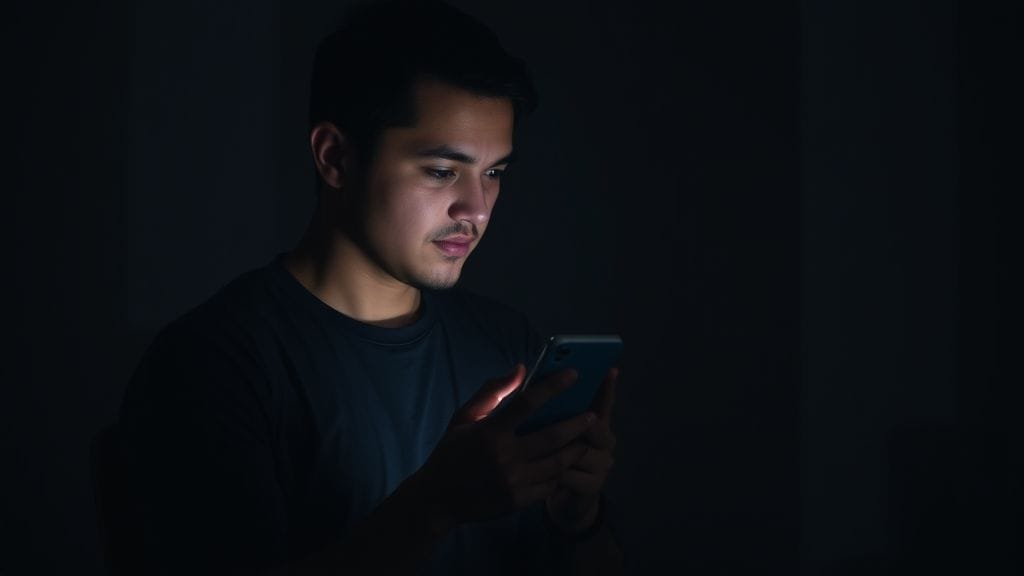
The person you love is holding a phone right now. Somewhere between the notifications, the emojis, the memes, and the silences—they’re asking one silent question:
Do you see me?
Make sure your answer comes through.
💬 CTA:
What’s your digital love language?
Drop in your texting style in the comments below. Let’s learn this new language of love—together.
Disclaimer: This post is for informational and emotional support purposes only. Every relationship is unique, and this is not professional legal, medical, or mental health advice. Read our full disclaimer.
Affiliate Disclosure: Some links in this post may be affiliate links. If you make a purchase through them, I may earn a small commission at no extra cost to you. Learn more here.
Pingback: Digital Intimacy: Love in the Age of Smartphones - Love and Breakups